
Mission-critical infrastructure demands mission-critical engineering.
Proven outcomes for aerospace and defense contractors.
Compliance-first infrastructure that passes your audits.
We design and deploy AWS architectures that meet ITAR, CMMC, and FedRAMP requirements from the ground up – not retrofitted after the fact. Every control is documented. Every access policy is scoped to least privilege. Every workload is isolated to the classification level it requires.
For contractors moving into GovCloud or building toward a FedRAMP authorization, we run the technical implementation while your compliance team runs the program.
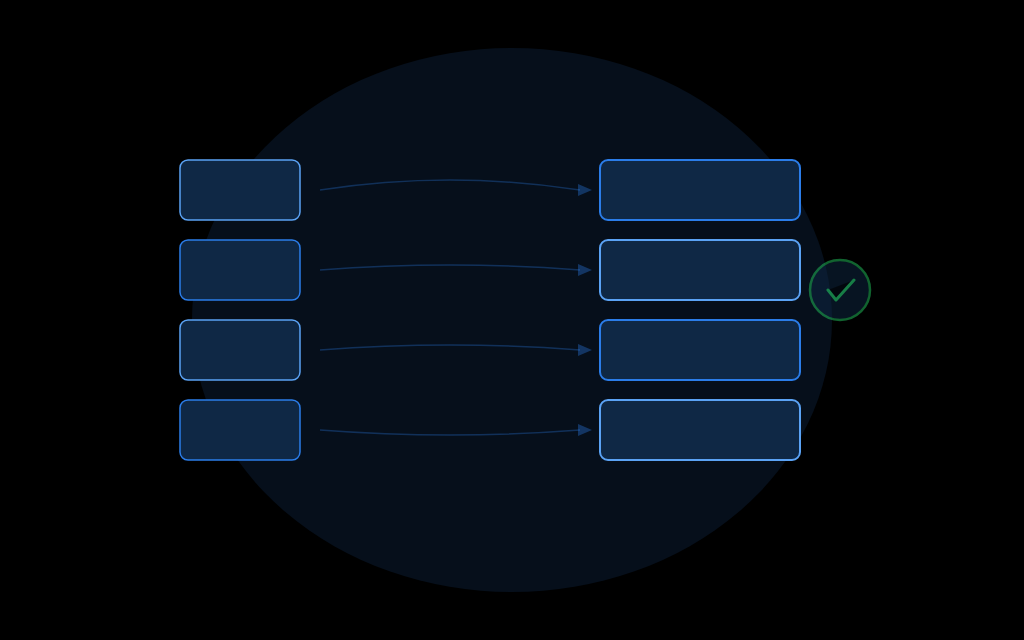
Mission-critical systems modernized without stopping the mission.
We have executed 47 production migrations without a single unplanned outage. Off VMware, off end-of-life on-premise infrastructure, off proprietary hardware — onto AWS-native compute with tested rollback plans, controlled increments, and full documentation on handover. The mission keeps running throughout.
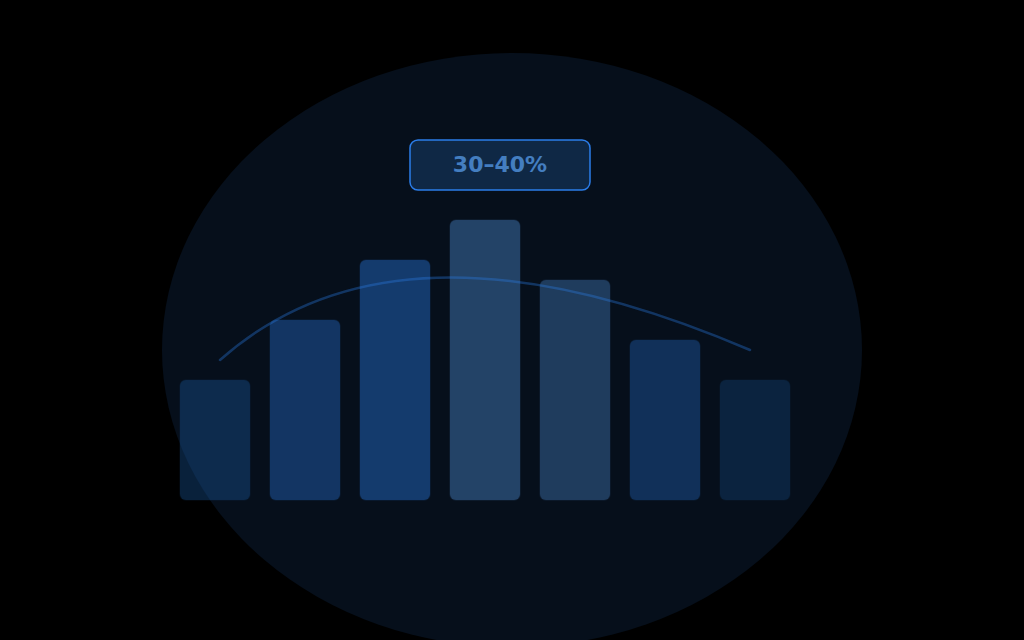
AI that reaches production - governed, traceable, compliant.
We deployed AI-assisted analysis for Airvoyant’s regulated aviation SaaS platform — 100% explanation traceability, zero out-of-band deployments, every change through existing CI/CD controls. Re-analysis response time under 10 seconds. Delivered in 4 months.
The same engineering discipline applies to aerospace and defense AI workloads: AI explains and recommends, deterministic logic decides, every output traceable to an approved source.
Pick your starting point
Migration & Legacy Transformation
Off end-of-life on-premise infrastructure. Onto AWS-native compute – with the compliance documentation, access controls, and governance architecture your program office requires. Average 60-day delivery. Zero rollbacks. Put the right answer in every technician’s hands in seconds. AI RAG on Amazon Bedrock – ingests IPCs, AMMs, and maintenance records from Quantum Control and TRAX. Natural language queries. 100% traceable to approved sources.
AI Proof of Concept to Production
A structured 4-month program that takes an AI use case – predictive maintenance, anomaly detection, supply chain intelligence – from scoped PoC to live on AWS. Governed, CI/CD-deployed, 100% explanation traceability. No orphaned pilots.
Optimization OLA + Cost Assessment
Most aerospace and defense contractors are carrying significant waste in legacy licensing, over-provisioned compute, and software spend. We find it, fix it, and redirect those savings toward the modernization and AI investments the mission needs.
A process built for regulated environments - not standard IT timelines.
Phase 1
Infrastructure & compliance assessment
Phase 2
Roadmap, architecture & approvals
Phase 3
Implementation sprint
Phase 4+
Ongoing managed operations
How aviation operators measure success
200-server VMware migration. Ahead of schedule. Zero disruption.
When Broadcom ended VMware licensing with 60 days notice, Unical Aviation — managing 92 million parts globally — needed an immediate solution. Completed on time, under budget, operations uninterrupted.
Modern cloud-ready identity across a global aviation operation.
After migrating to 100% AWS, Unical needed identity built for their security requirements. Deep Blue implemented Okta Workforce Identity Cloud – Adaptive MFA, Behavior Detection, Advanced Server Access.
AI in production: 100% traceability, 0 out-of-band deployments.
Deep Blue deployed AI-assisted analysis to Airvoyant’s regulated aviation SaaS platform – through existing CI/CD, zero exceptions. Re-analysis under 10 seconds. 4-month delivery.
FAQ
How do you handle ITAR compliance in cloud and AI deployments?
ITAR compliance is a constraint we build to from the start – not a checklist applied at the end. We scope every architecture to the applicable ITAR restrictions: data residency in US-based AWS regions, access controls limited to US persons, and no cross-border data flows for controlled technical data. Every control is documented as compliance evidence. We work with your legal and export control teams from day one.
Can you support CMMC Level 2 or Level 3 requirements?
Yes. We design AWS environments to meet CMMC Level 2 and Level 3 practice requirements – including access control, audit and accountability, configuration management, identification and authentication, incident response, and system and communications protection. We build and deliver the technical implementation; your compliance team owns the program-level documentation and assessment.
Do you work with AWS GovCloud?
Yes. For workloads requiring GovCloud isolation – FedRAMP High, DoD IL4/IL5, or ITAR-controlled data – we design and deploy in AWS GovCloud (US). We have experience migrating workloads from commercial AWS regions to GovCloud and building net-new GovCloud environments from scratch.
How do you deploy AI in a classified or controlled environment?
Every AI deployment we run goes through your existing CI/CD pipeline – no exceptions. AI explains and recommends; deterministic logic decides. Every output is traceable to a specific rule, document, or data source. No model has direct access to data stores – all retrieval goes through controlled, audited layers. This architecture was validated in production for Airvoyant’s regulated aviation SaaS platform.
What happens to our data when we move to the cloud?
Your data stays in your AWS environment. Multi-tenant isolation is a hard architectural constraint – no data is shared across clients, no AI model is trained on your data, and all access is scoped to least privilege IAM policies. For controlled technical data, we enforce additional controls including encryption at rest and in transit, CloudTrail audit logging, and AWS Config compliance monitoring.
What does a typical engagement cost?
Engagements are priced by scope and timeline, typically ranging from $50K for a compliance assessment to $500K for a full modernization program. We set baselines before we start – compliance posture, infrastructure cost, system availability – and measure against them. You see the numbers before we start and after we deliver. The OLA cost assessment often identifies savings that fund the modernization work entirely.